Christopher JohnsonChief Growth Officer
Secured a new C-suite position.
“Rebecca’s exceptional skills in resume writing and career guidance played a pivotal role in securing my new C-suite position.”
When P&L ownership, turnarounds, growth, and organizational scale are buried under routine responsibilities, the resume can make an executive career look one or two levels smaller than it is.
By the time you are competing for Director, VP, SVP, or C-suite roles, nobody needs another list of responsibilities. They need to understand the size of what you were trusted to lead, what was at stake, what changed under your leadership, and why your record deserves attention over another executive with a similar title.
If those things are buried, diluted, or missing, years of increasing responsibility can read far below the level of the career behind them.
Business units, geographies, P&L, headcount, customers, channels, operating complexity, and decision authority.
Turnarounds, market entry, transformation, margin pressure, restructuring, major customers, growth, risk, and situations where the wrong call had consequences.
Revenue, profitability, cost, speed, market position, capability, retention, execution, or another measurable change that gives the reader something concrete to judge.
The assignments, decisions, progression, results, and patterns of trust that make your career recognizably yours.

Before I became a resume writer, I worked across HR and corporate recruiting, including Amazon. That gave me years of seeing what hiring teams notice, what they skim past, and how easily strong experience can disappear inside ordinary language.
I saw accomplished people reduce years of responsibility to harmless little phrases like “managed operations,” “responsible for strategy,” or “led cross-functional teams.”
Nothing in those statements was technically wrong.
They just left out the part that made the person worth interviewing.
The size of the business. The decision they were trusted to make. The operation they turned around. The promotion that came because leadership already knew what they could handle.
When I transitioned into resume writing in 2003, that became the part of the job I cared about most.
The sentence is usually the easy part.
The harder part is figuring out what belongs on the page in the first place.
That matters even more at the executive level because your value rarely sits neatly inside a job description. It is scattered across years of decisions, difficult assignments, commercial results, transformations, and things you stopped thinking of as accomplishments because they became part of the job.
Clients will sometimes tell me:
“I was just doing my job.”
And very often, that is where some of the strongest material is hiding.
CPRW · ACRW · Resume writing since 2003
View Rebecca Hughes on LinkedIn →A resume can sound polished and still make an accomplished executive look ordinary.
The hard calls happen before the prose. Seeing that a multimillion-dollar P&L has been reduced to “managed budget.” Knowing the turnaround buried on page two belongs near the top. Realizing ten respectable bullets are weakening the three that could change how the reader sees you.
I have been making those calls since 2003. I need to see what the resume is shrinking, what it is overexplaining, and what it has missed altogether.
That judgment is what I have spent 23+ years sharpening.
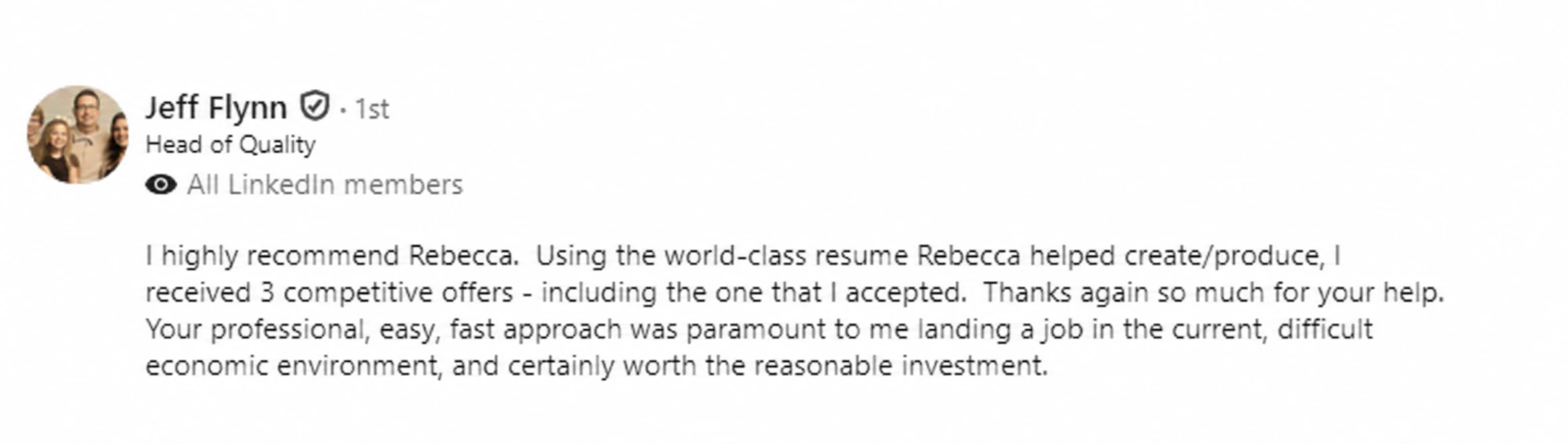
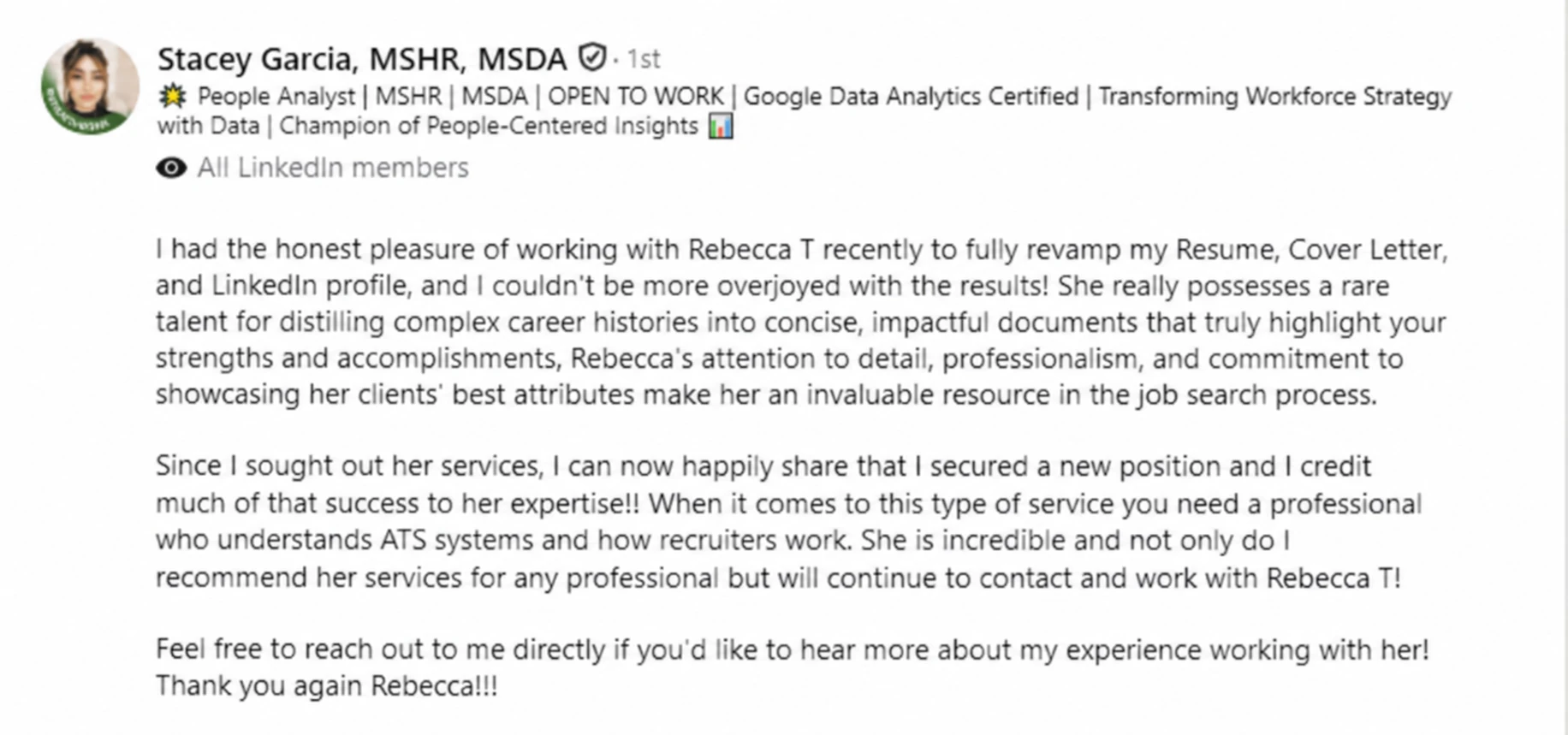
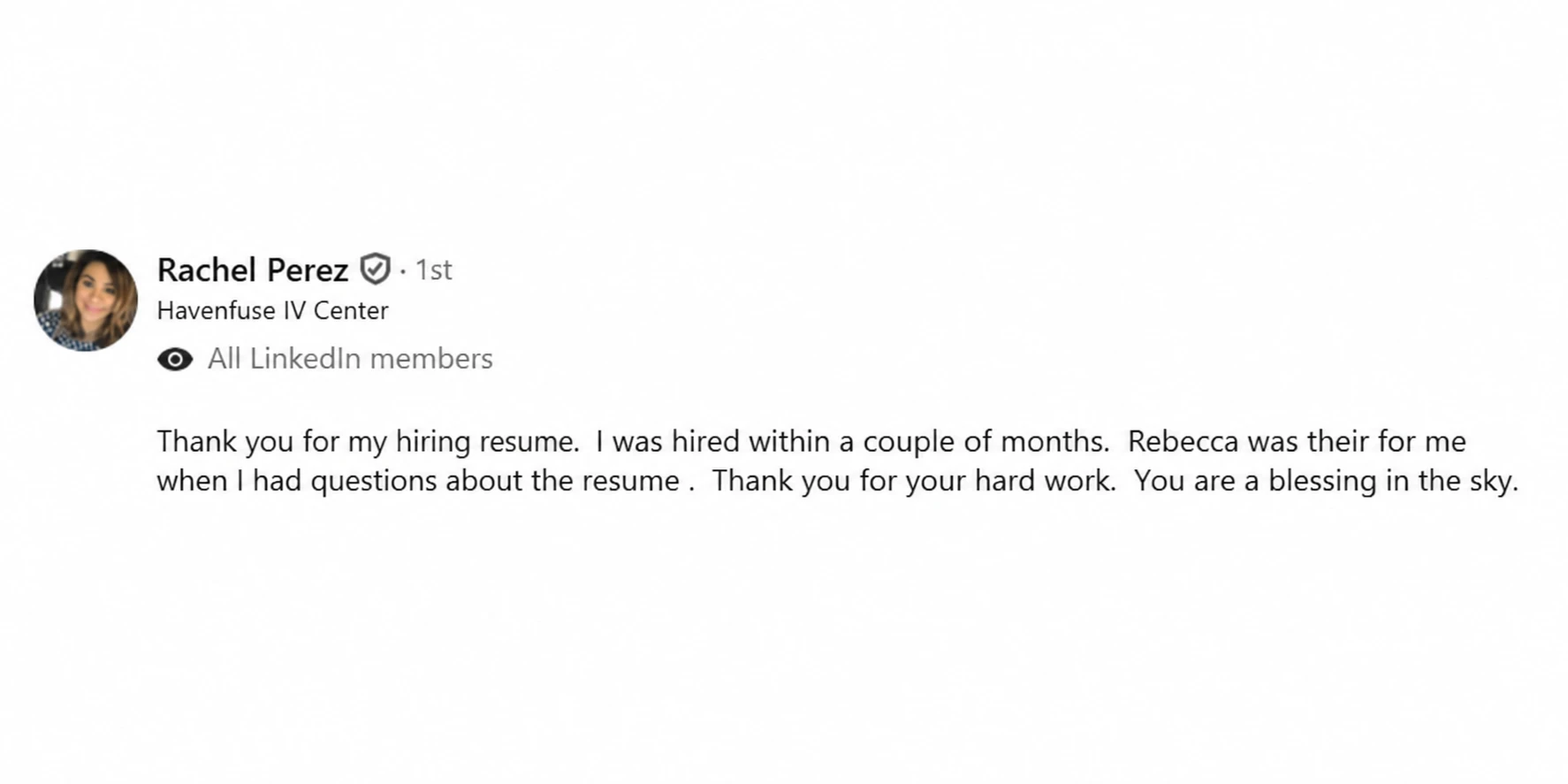
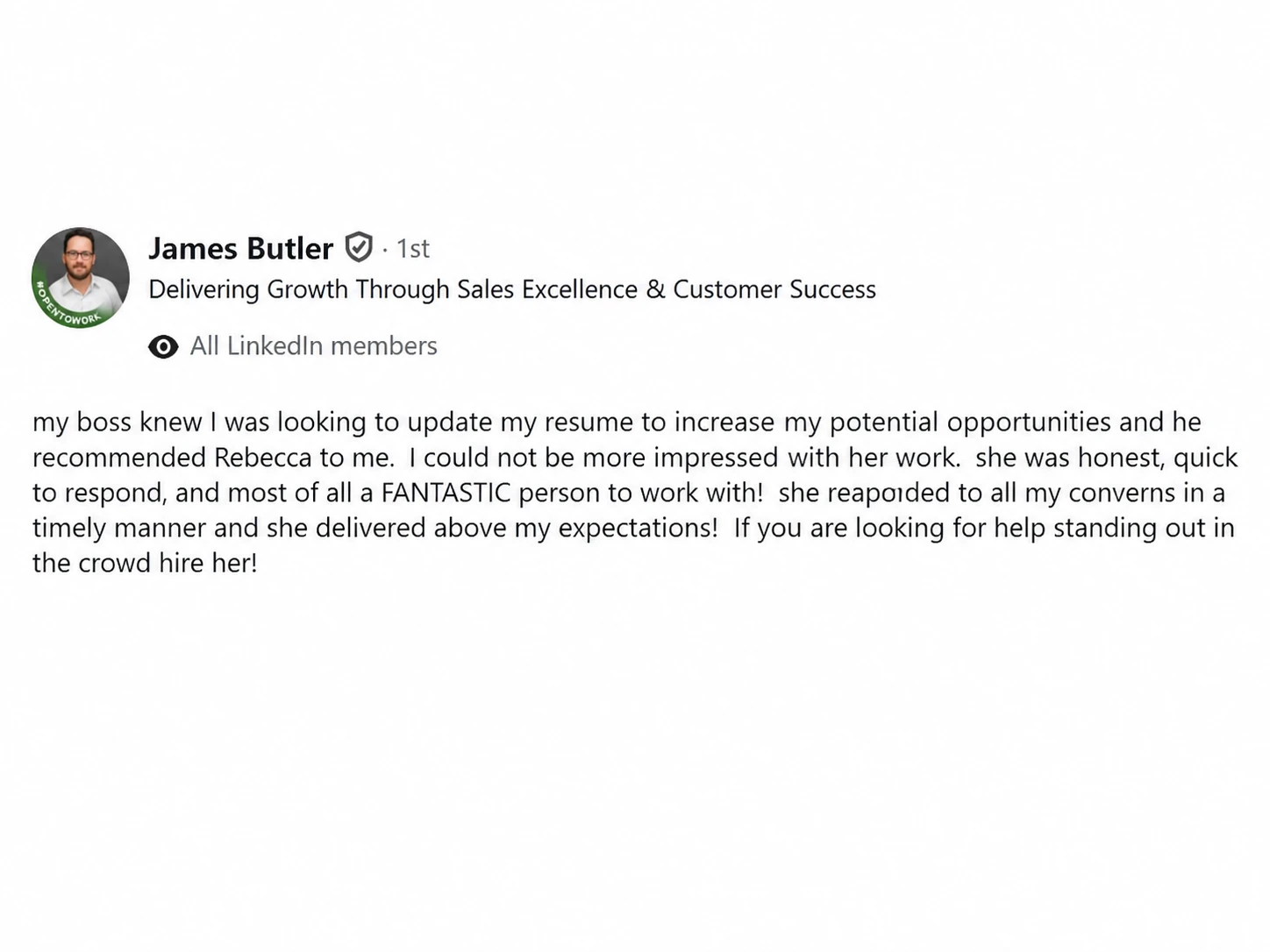
“Rebecca’s exceptional skills in resume writing and career guidance played a pivotal role in securing my new C-suite position.”

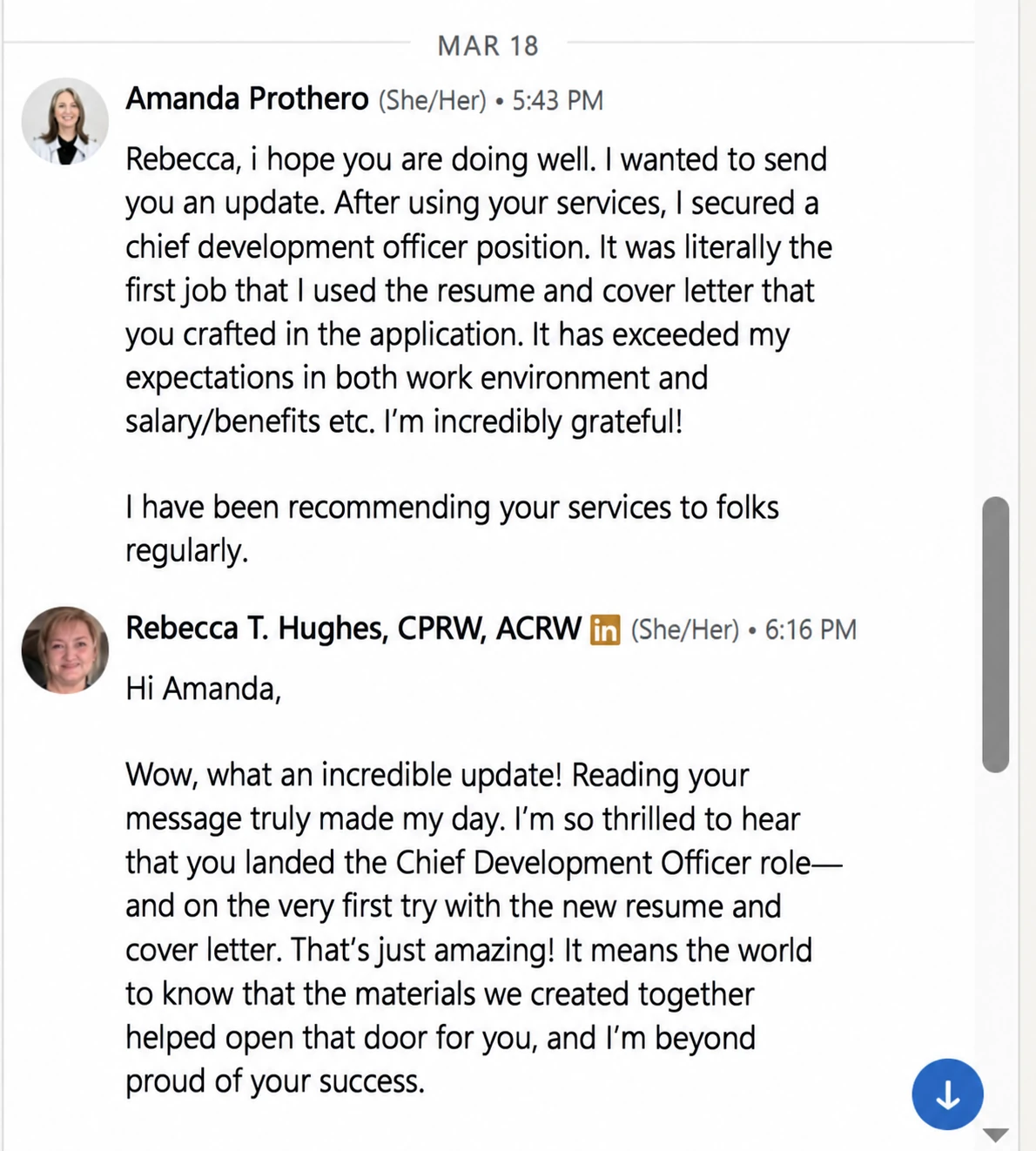
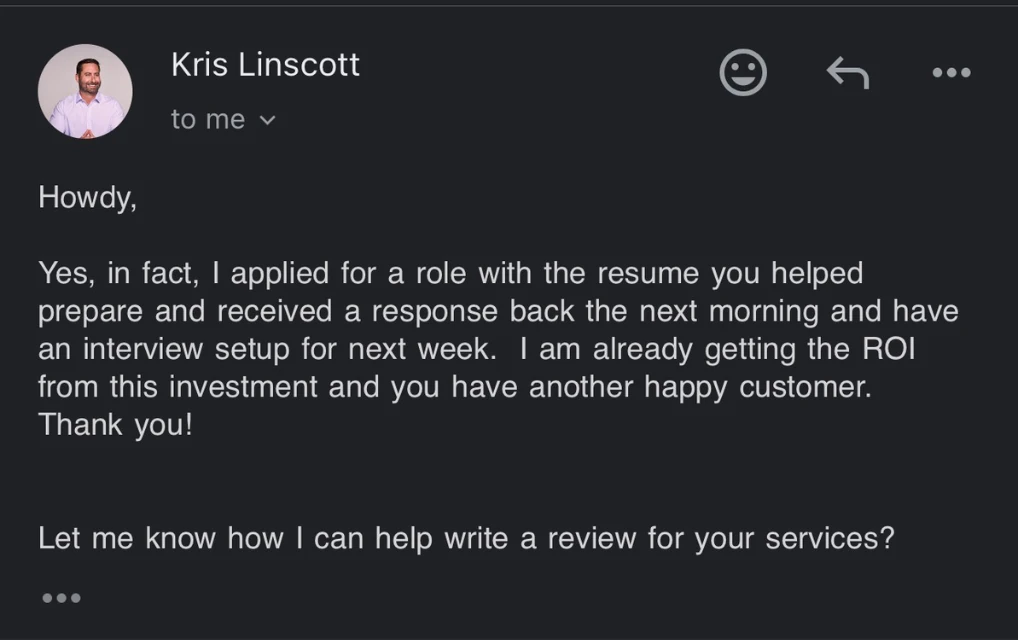
“It was literally the first job that I used the resume and cover letter that you crafted in the application.”

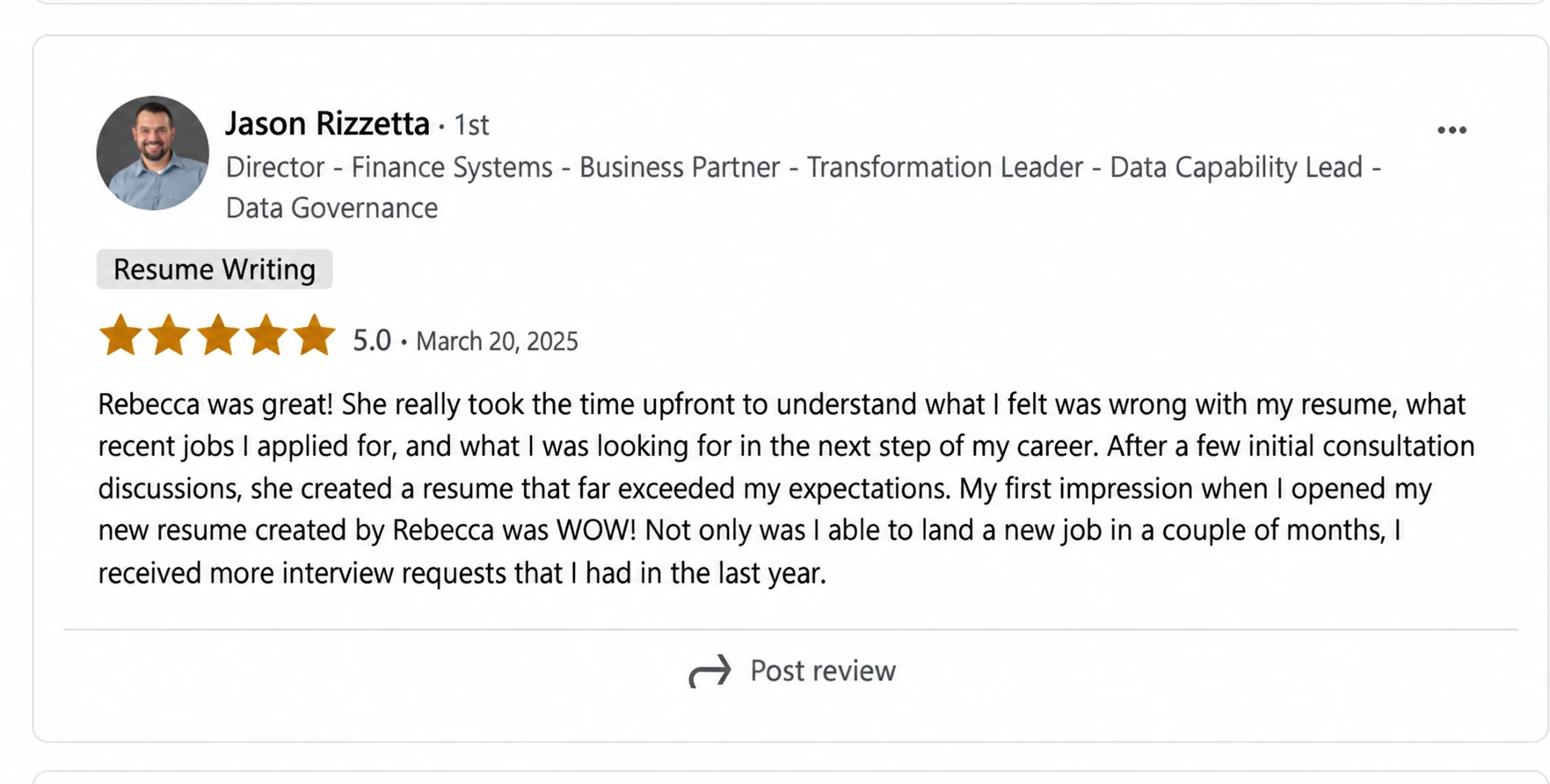
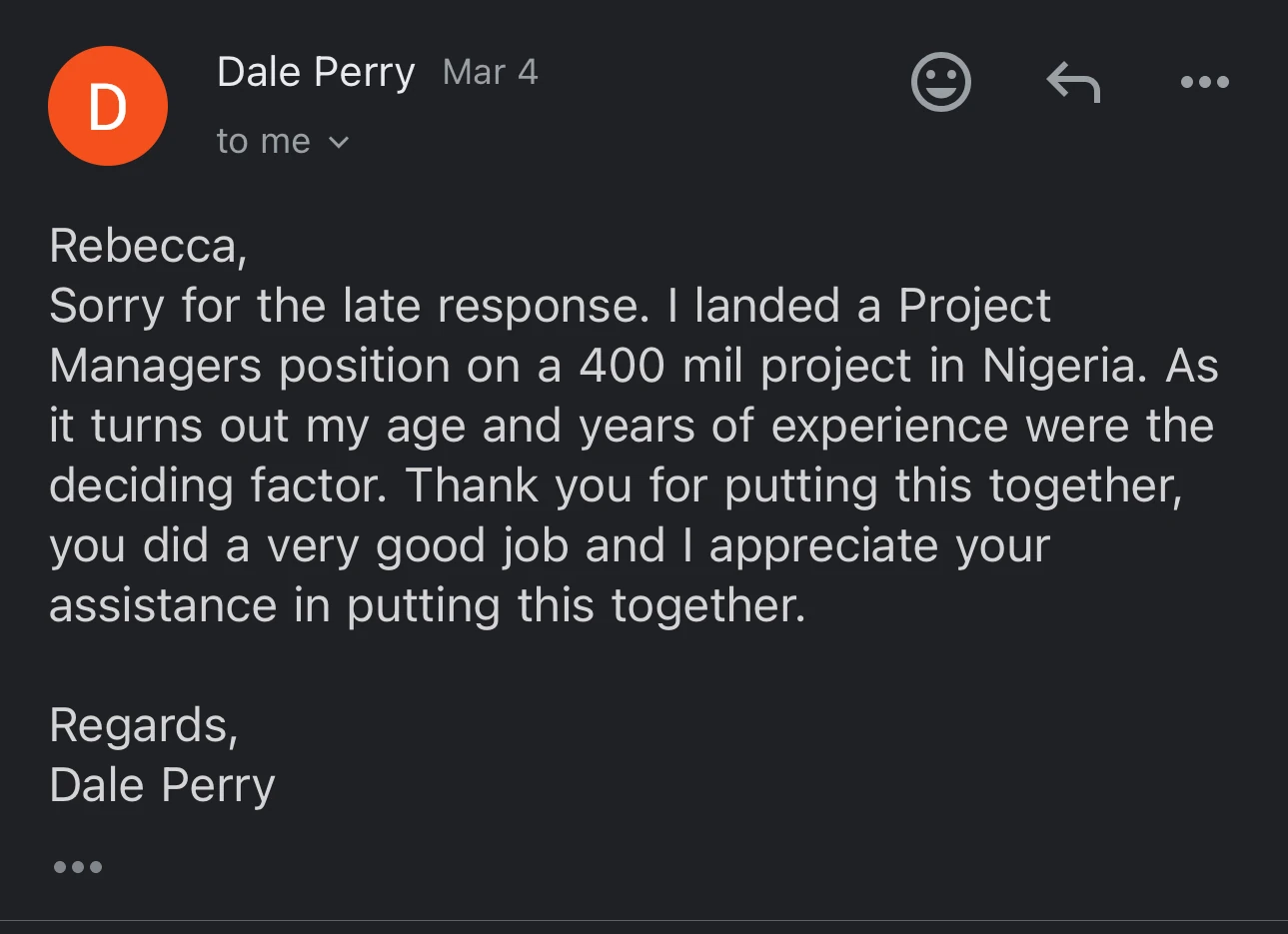
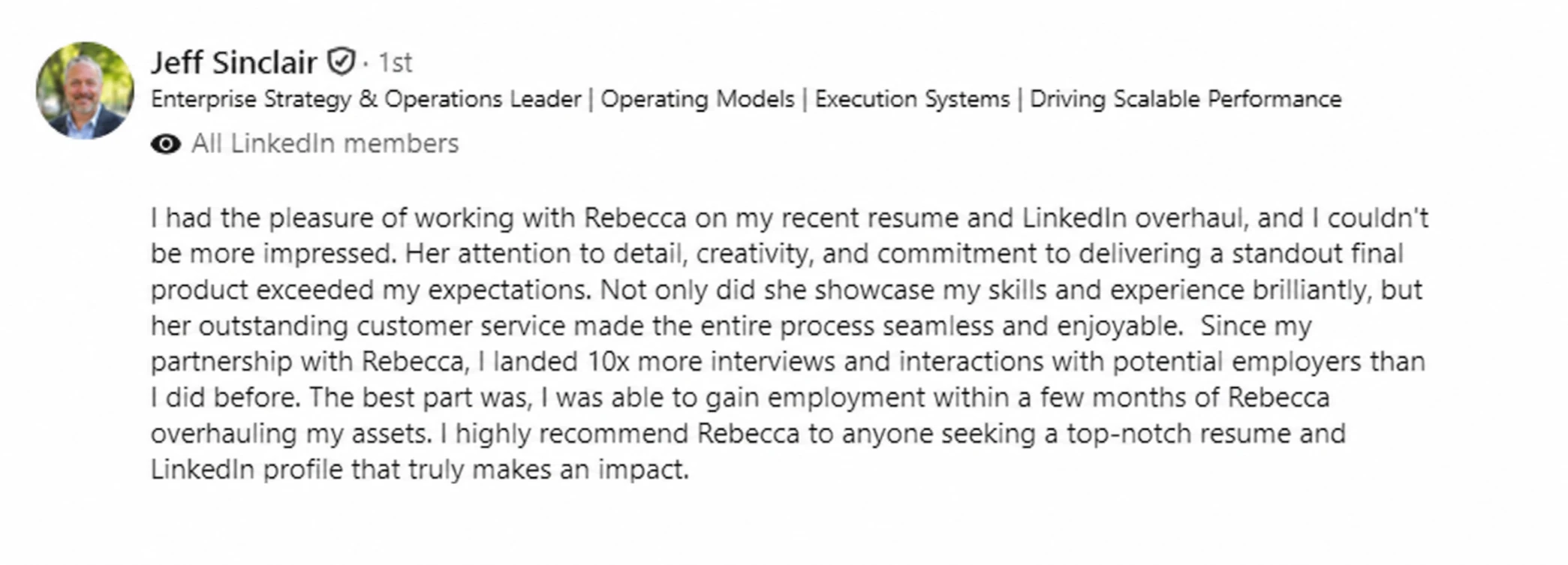
“Not only was I able to land a new job in a couple of months, I received more interview requests than I had in the last year.”

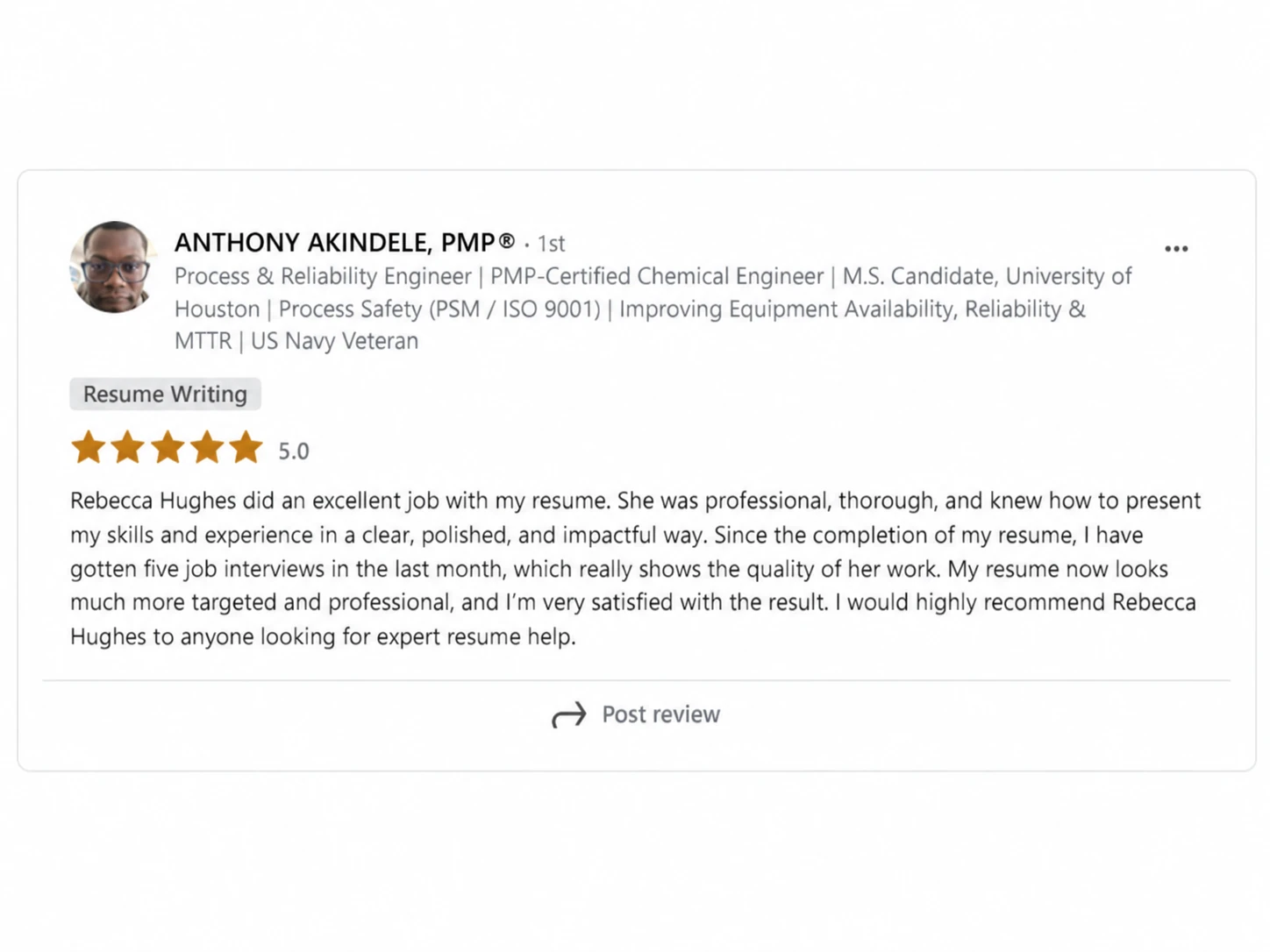
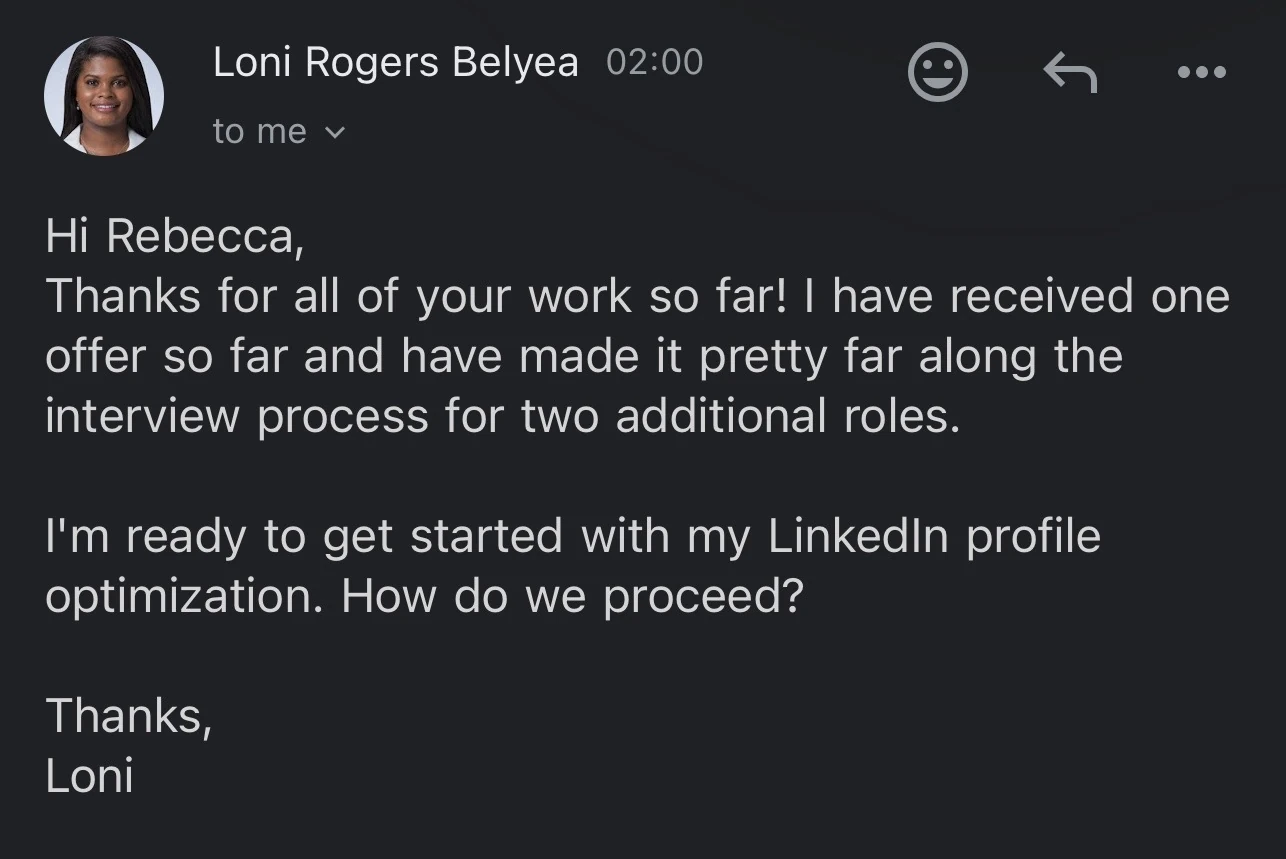
“Since the completion of my resume, I have gotten five job interviews in the last month.”
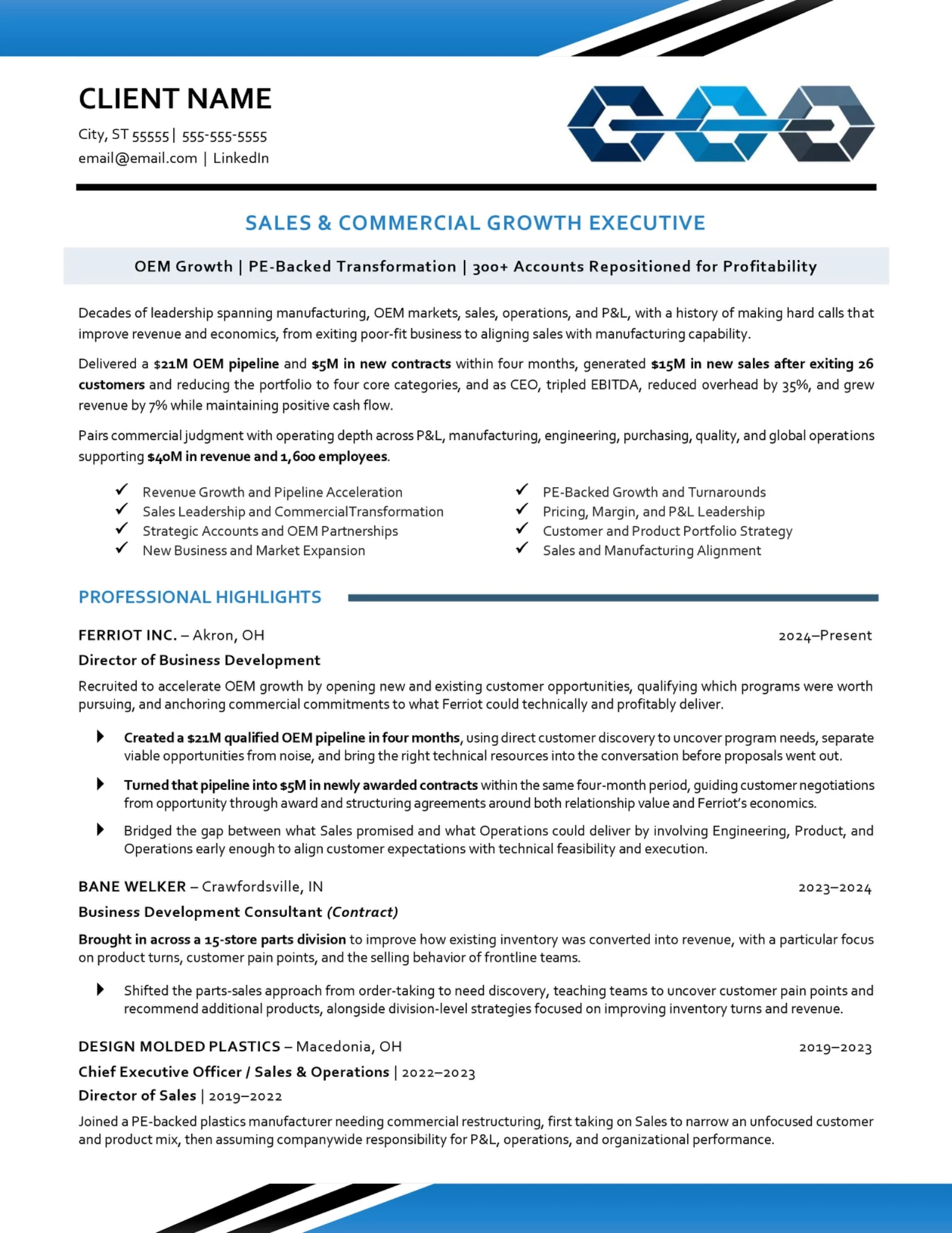
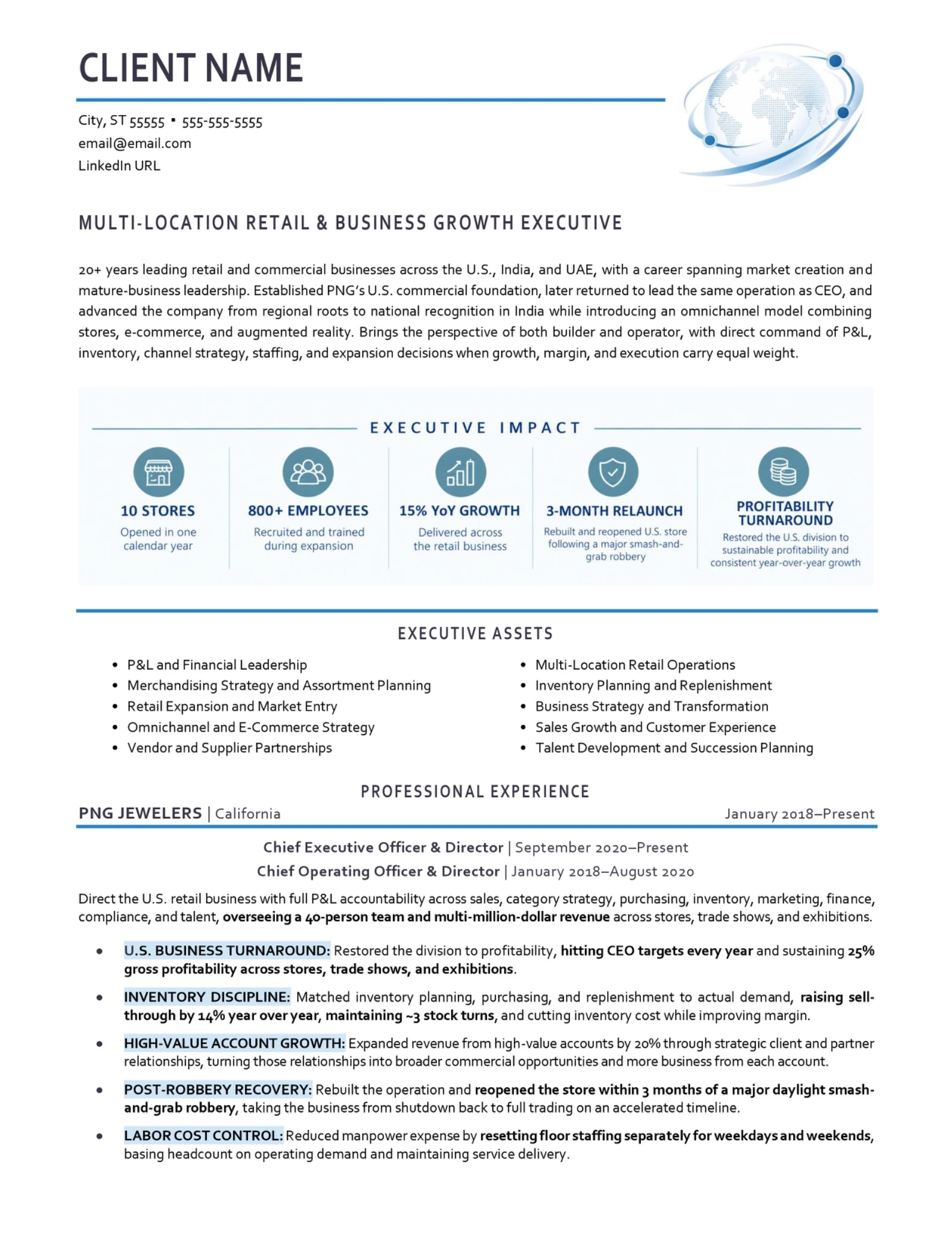
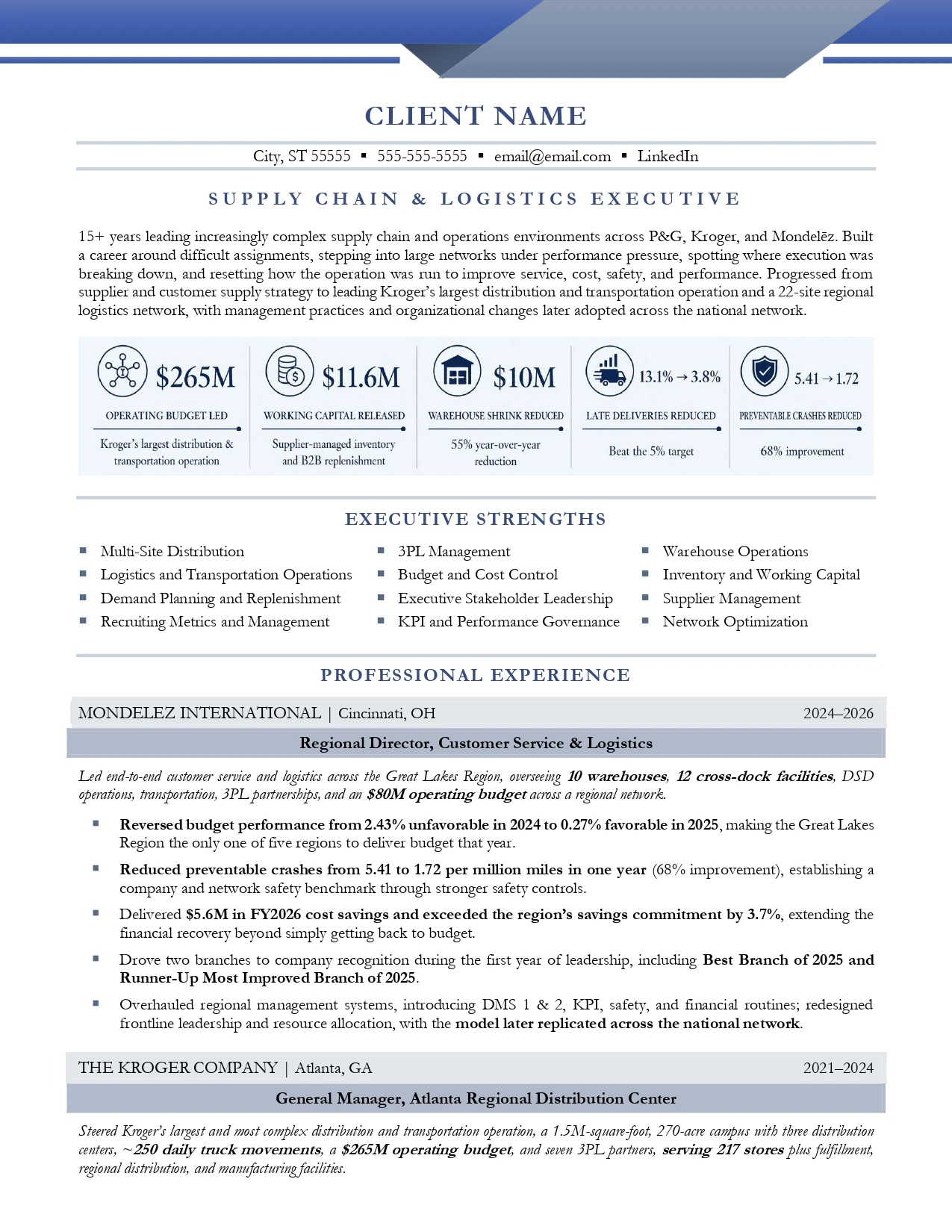
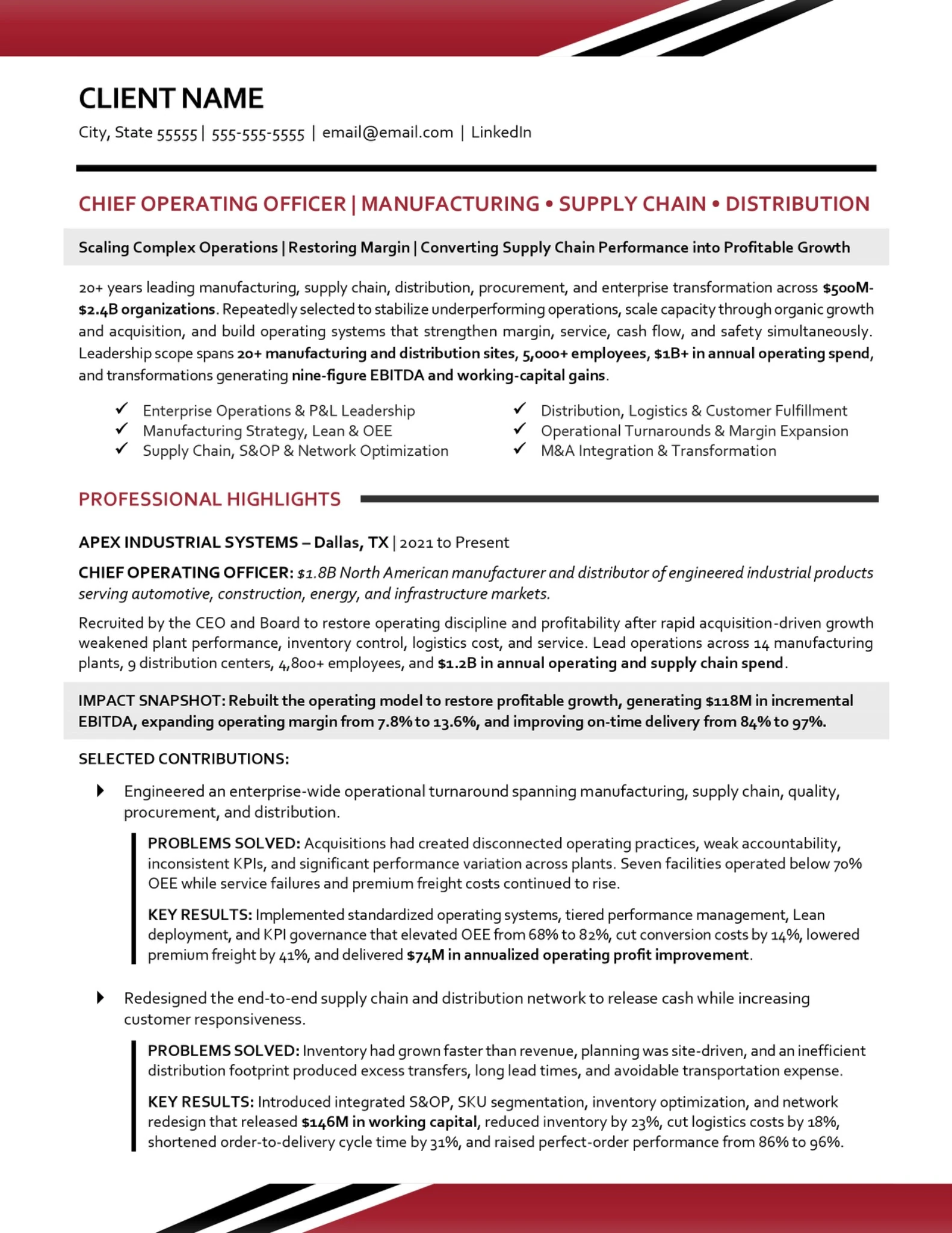
Four anonymized first-page samples across sales and commercial growth, multi-location retail, supply chain and logistics, and C-suite operations. Identifying details are removed; the strategy, structure, and writing are otherwise shown as delivered.
Once I know the level you’re pursuing, I go back through the career looking for what the current resume missed, buried, or gave too little weight.
A title and a list of responsibilities tell me very little. I want to know what you were trusted with: the size of the business, the people, the money, the customers, the problems, the decisions, and the situations where the stakes were high.
That is often where the strongest material is. The turnaround nobody quantified. The operation you inherited and had to stabilize. The account you saved. The new market you opened. The assignment leadership gave you because they trusted you to handle it.
A long career creates too much material, not too little. Some things need to move up. Some need numbers. Some need context. Some need one line. Some need to come out completely.
By that point, I know what the resume needs to say first, what has to support it, and what should never compete for attention again.
That judgment is the part clients are hiring me for. The writing comes after it.
I’ll review it against the kind of executive opportunities you want to pursue and tell you where it is presenting you well, where it is weakening the case, and what I believe needs to change.
There is no charge for the initial evaluation. If a rewrite makes sense, I will explain the scope and fee after I have seen the resume. Then you decide whether you want to proceed.
Yes. I review the resume you’re using now and the direction you want to pursue before I recommend a service or fee.
Because I want to see the document first. Some resumes need a substantial rebuild; others need a narrower intervention. I recommend scope and fee only after I understand what the resume needs.